
Circular Biomass Valorisation
Growing demands for food, feed, biomaterials, biochemicals, biofuels, bioenergy, and soil fertility is placing increasing pressure on available biomass resources. To meet these demands, the resource use efficiency of the available biomass should be optimized without compromising the environment, taking into account their composition, biorefinery yield, and specific functionality in different applications as well as opportunities for cascading use.
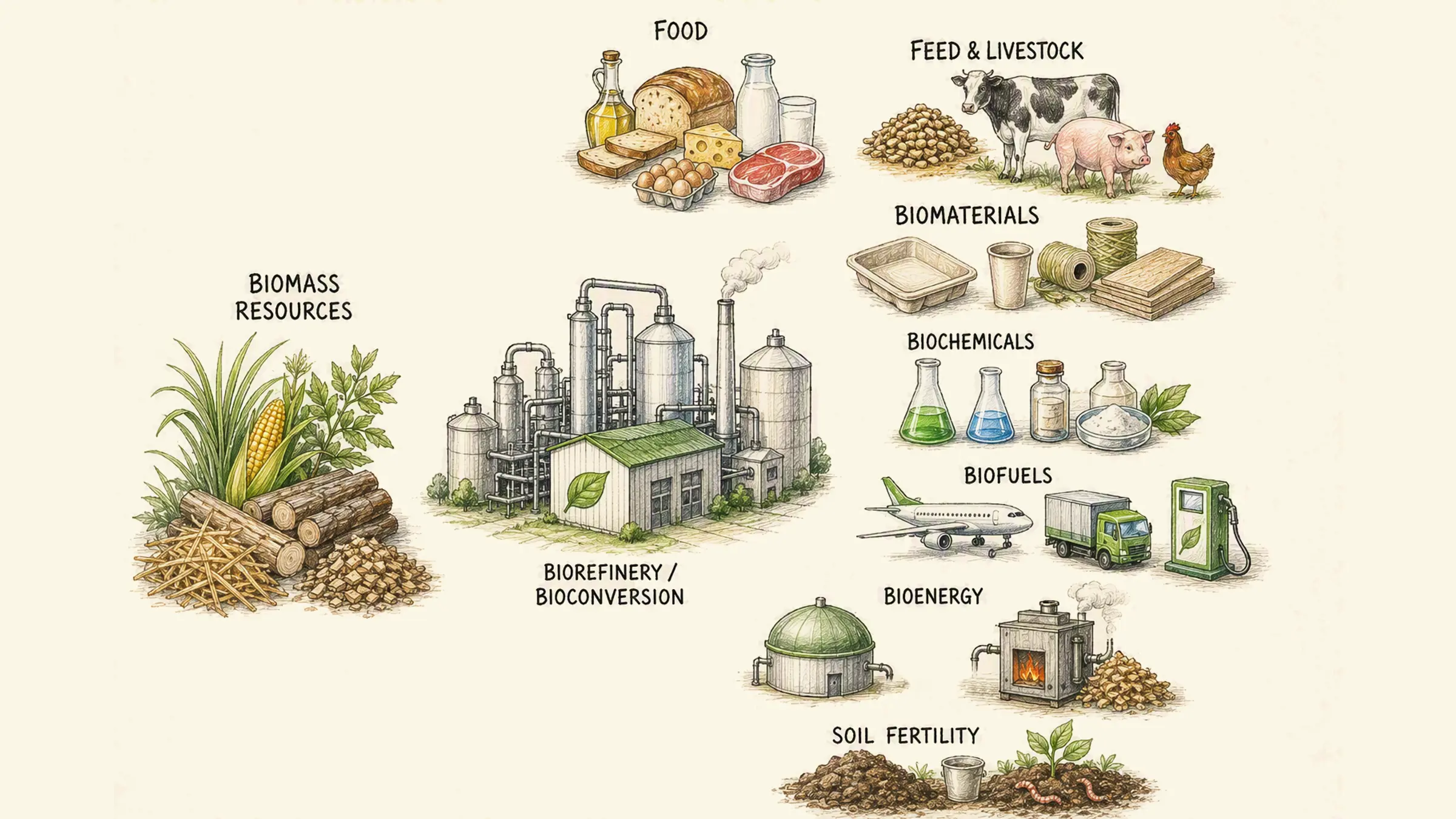
While it is widely acknowledged that replacing primary resources and fossil-based fuels and materials delivers environmental benefits, there is still no clear consensus on which applications offer the greatest advantages. Existing prioritization frameworks, such as the EU Food Waste Hierarchy, often apply fixed rankings that do not adequately consider the unique characteristics and functional value of a material in a particular application. Moreover, comparisons of the environmental performance of alternative biobased applications within the same sector, e.g. bioenergy versus bioplastic production, are relatively scarce. The studies that do make such comparisons typically focus on a single feedstock, limiting their broader applicability.
This website provides an analysis tool, data, and insights to support more informed evaluation and decision-making regarding the valorisation of biomass resources, helping stakeholders to identify the most appropriate and sustainable options. The tools focusses on both resource use efficiency and climate impact. It is demonstrated that the ranking of valorisation pathways depends strongly on the composition of the specific biomass resource being assessed.